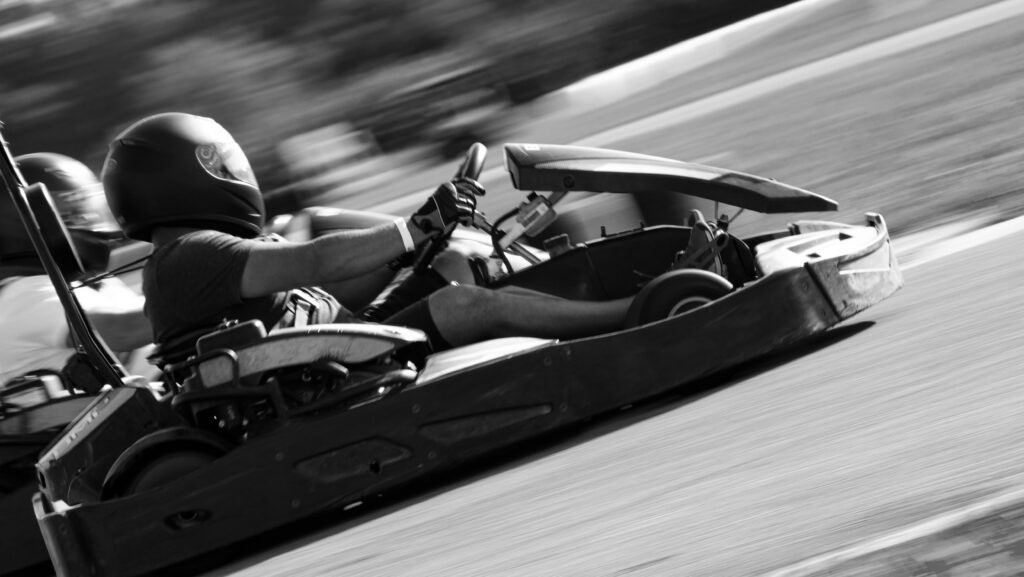
Smooth vs. Aggressive Driving: Why Faster Go-Kart Racers Look Slower
One of the most confusing moments for new go-kart racers happens after a few weeks on track. You’re pushing harder, braking later, turning more aggressively—yet your lap times stop improving. Meanwhile, the fastest drivers don’t look like they’re trying at all.
This isn’t an illusion. In karting, smooth driving consistently beats aggressive driving, especially as speed increases. This article explains why aggressive inputs slow you down, how smooth drivers generate speed more efficiently, and what you can do to make the shift without feeling like you’re backing off.
What “Aggressive” Driving Really Looks Like
Aggressive driving usually feels fast from the seat, but it creates hidden problems that hurt lap times.
Common Aggressive Habits
- Sudden steering inputs
- Hard, late braking
- Full throttle too early in corners
- Overcorrecting mid-turn
- Sliding tires to “force” rotation
These behaviors overload the kart’s tires and chassis, reducing grip exactly when you need it most.
Aggression often comes from effort, not efficiency.
Why Smooth Drivers Are Actually Faster
Speed in karting comes from maintaining momentum, not attacking every corner.
Smooth Drivers Focus On:
- Gradual steering inputs
- Predictable throttle application
- Balanced braking
- Letting the kart rotate naturally
- Minimizing tire scrub
Karts have very little suspension. Any sudden input transfers weight abruptly, which overwhelms the tires and causes sliding. Sliding feels dramatic—but it’s slow.
Smooth drivers keep the kart right on the edge of grip without crossing it.
The Physics Behind Smooth Speed (Without the Math)
You don’t need an engineering degree to understand this—just one principle:
Tires only have so much grip. Use it wisely.
When you brake, turn, or accelerate aggressively, you ask the tire to do too many things at once. The result is:
- Loss of grip
- Reduced exit speed
- Increased tire wear
- Inconsistent lap times
Smooth inputs allow the tire to stay loaded evenly, producing more usable grip for longer.
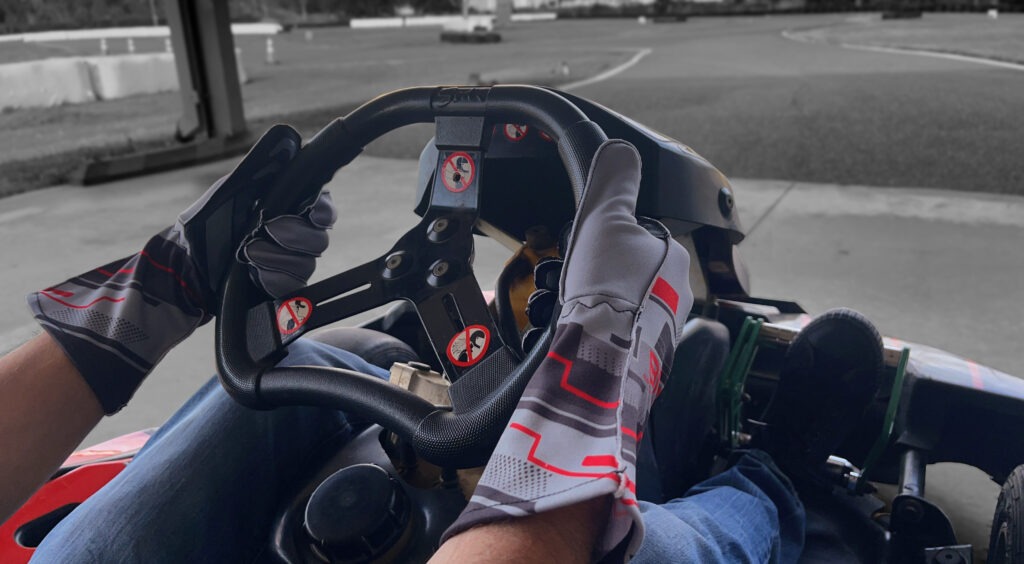
Steering: Less Input, More Speed
One of the biggest differences between fast and slow drivers is steering discipline.
Aggressive Steering Causes:
- Front tire scrub
- Mid-corner understeer
- Reduced exit speed
Smooth Steering Achieves:
- Better front grip
- Cleaner rotation
- Earlier, more effective throttle application
Fast drivers turn the wheel once, not constantly. If you’re correcting mid-corner, you’ve already lost time.
Throttle Control: Why “Flat Out” Isn’t Always Faster
New drivers often equate speed with full throttle. In reality, when you apply throttle matters more than how much.
Smooth drivers:
- Roll onto the throttle progressively
- Match throttle to steering angle
- Avoid spinning the rear tires
Aggressive drivers often apply throttle too early, forcing the kart wide and killing exit speed.
A clean exit down the straight is worth more time than attacking the entry.
Braking: Earlier Can Be Faster
Late braking feels heroic. It’s also one of the easiest ways to lose lap time.
Smooth braking:
- Happens earlier
- Is more controlled
- Keeps the kart stable
- Allows better turn-in
Aggressive braking overloads the front tires, causing lockups or under-rotation. The fastest drivers are usually braking less, not more.
How to Train Smoothness Intentionally
Smooth driving is a skill—and like any skill, it can be practiced deliberately.
Practical Tips
- Focus on consistency, not outright speed
- Drive at 90% and aim for identical lap times
- Reduce steering corrections
- Listen to tire noise—sliding is lost grip
- Watch faster drivers and notice how calm they look
If you’re sweating after every lap, you’re probably overdriving.
Gear That Helps Promote Smooth Driving
Certain gear choices can make smooth driving easier to execute and feel.
- Quality Gloves: Improve steering feedback and reduce death-gripping the wheel
- Proper Seat Fit: Keeps your body stable, preventing unwanted inputs
- Consistent Tires: Predictable grip encourages controlled driving
Disclosure: This article may contain affiliate links. If you purchase through these links, BMP may earn a small commission at no additional cost to you.
Frequently Asked Questions
Q: Does smooth driving mean driving slower?
No. Smooth driving reduces wasted motion, which increases usable speed.
Q: Why do aggressive drivers feel faster?
Because sliding, noise, and corrections create the sensation of speed—even when lap times suffer.
Q: Is aggressive driving ever useful?
In rare situations like last-lap defense or avoiding incidents, aggression has a place. Consistent speed, however, comes from smoothness.
Conclusion
In go-kart racing, effort does not equal speed. Smooth drivers extract more grip, maintain momentum, and produce faster, more consistent lap times with less drama. If you feel stuck despite pushing harder, the solution isn’t more aggression—it’s better control.
Mastering smooth driving is one of the biggest breakthroughs a racer can make. Once you understand it, speed starts to feel easier—and that’s when real improvement begins.